Assembly votes in favor of SHI $1.5 million bid to buy city hall
Institute to build crown jewel, mixed-use art facility for locals, visitors
(About the Facility) (Economic Benefits) (Website)
The City and Borough of Juneau Assembly has voted in favor of selling a downtown parcel to Sealaska Heritage Institute (SHI), clearing the way for fundraising and construction of a premiere mixed-use art facility at the site.
The assembly considered two options at its regular meeting on Monday: whether to accept SHI’s offer to purchase city hall for $1.5 million or put it to the highest bidder.
The motion to sell to SHI passed with Mayor Beth Weldon and assembly members Ella Adkison, Paul Kelly, Adicia-Hughes Skandijs, Maureen Hall and Christine Woll voting in favor and Greg Smith, Neil Steininger and Nano Brooks voting against.
Assembly members who made the decision to support SHI’s offer made reference to the long-term financial benefits of the proposal and considered how much the institute’s Atnané Hít (Sealaska Heritage Arts Campus) has transformed downtown into an authentic capital city and acknowledged SHI as a unique community member.
Although the assembly members were deeply concerned about the city’s current fiscal status, their decision to support SHI was based on the economic, educational and cultural benefits SHI has provided to the community.
“We know this was a difficult decision for our city’s leaders, but we are thrilled with the assembly’s decision, and we look forward to further revitalizing the downtown area, enhancing Heritage Square and bringing glass culture and economic opportunities to Juneau,” said SHI President Rosita Worl.
“The completion of the Sealaska Heritage arts building will mark the achievement of our vision to make Juneau the Northwest Coast arts capital of the world.”
SHI will spend the next four years raising funds to build the facility, which is estimated to cost roughly $40 million. The institute will initially raze the old city hall, which will cost about $1 million to demolish and properly dispose of known contaminants. Once the building is down, SHI will install a garden for locals and visitors to use until it breaks ground on the project.
About the Facility
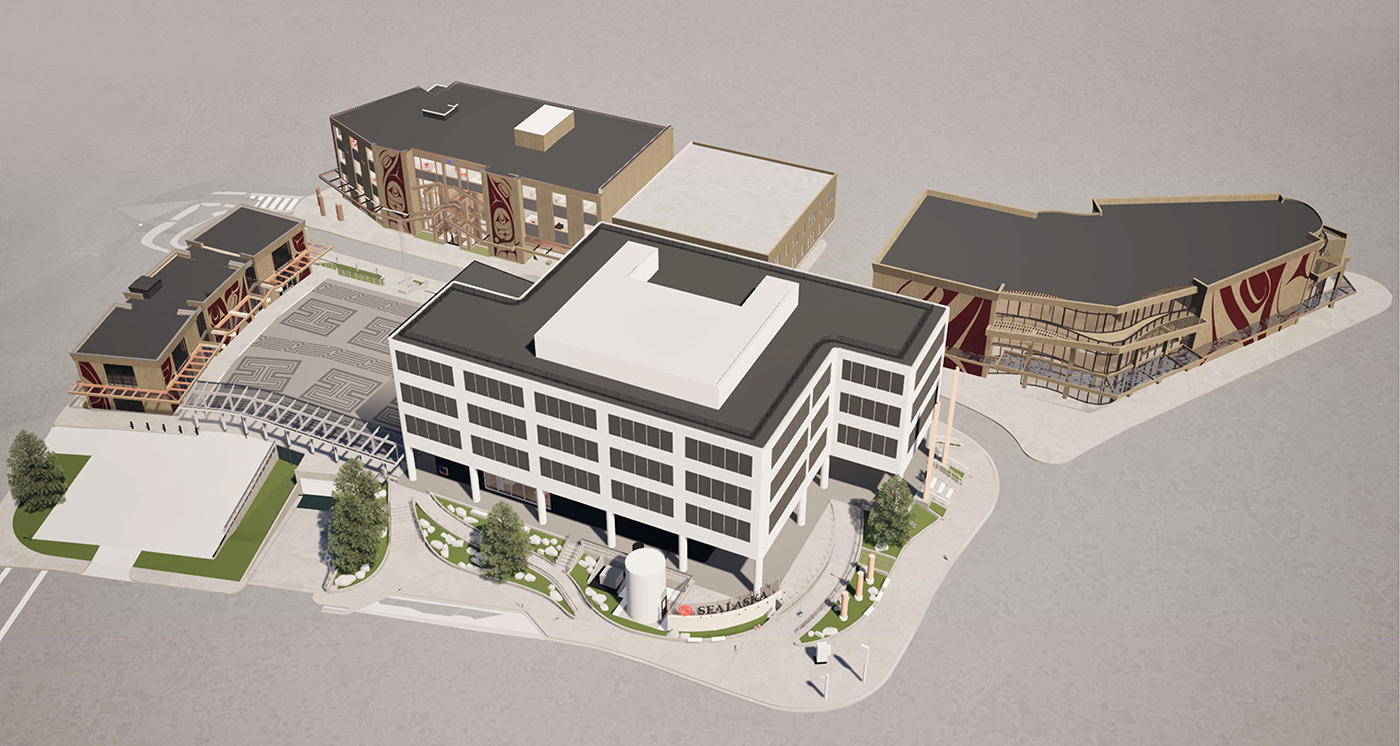
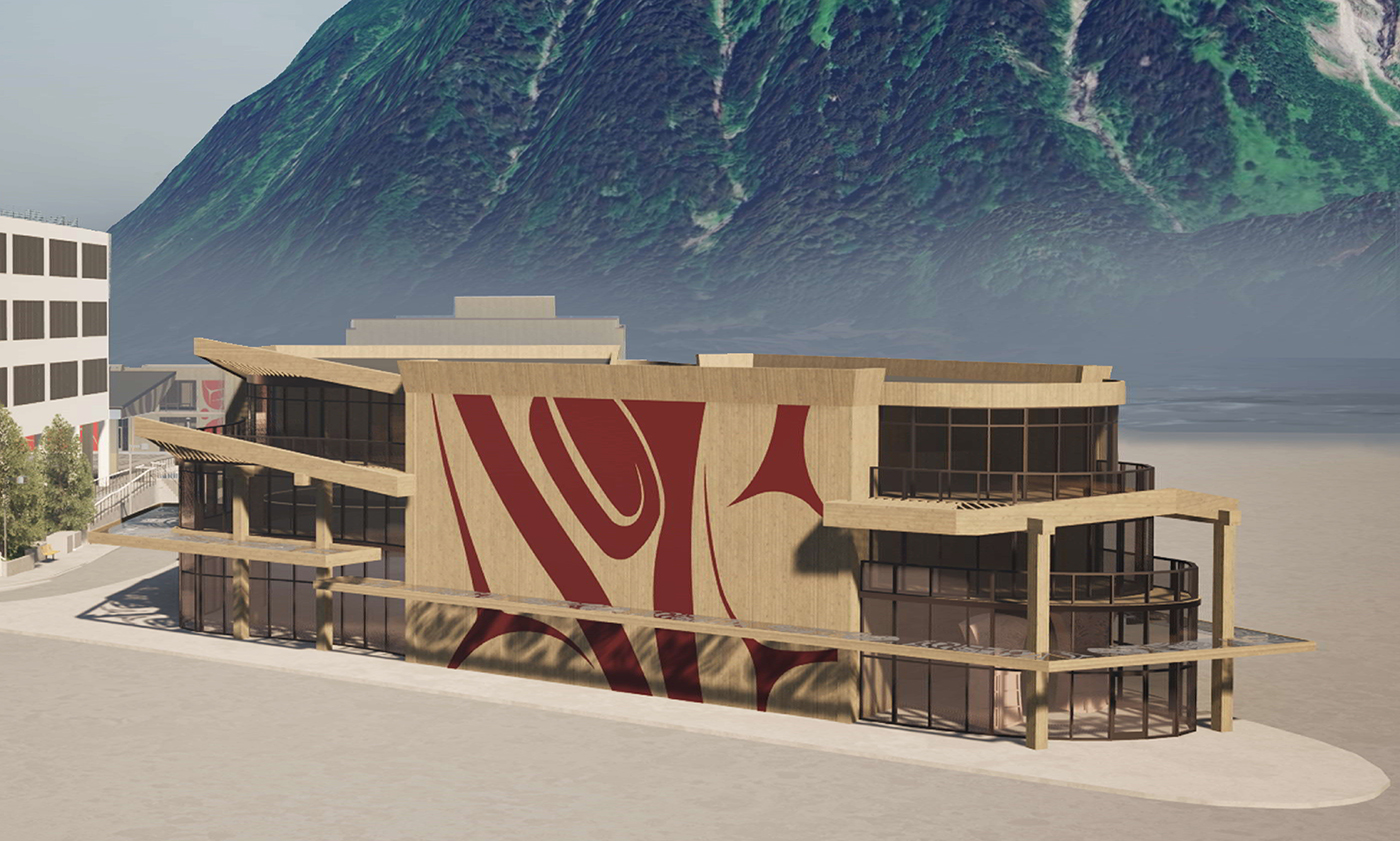
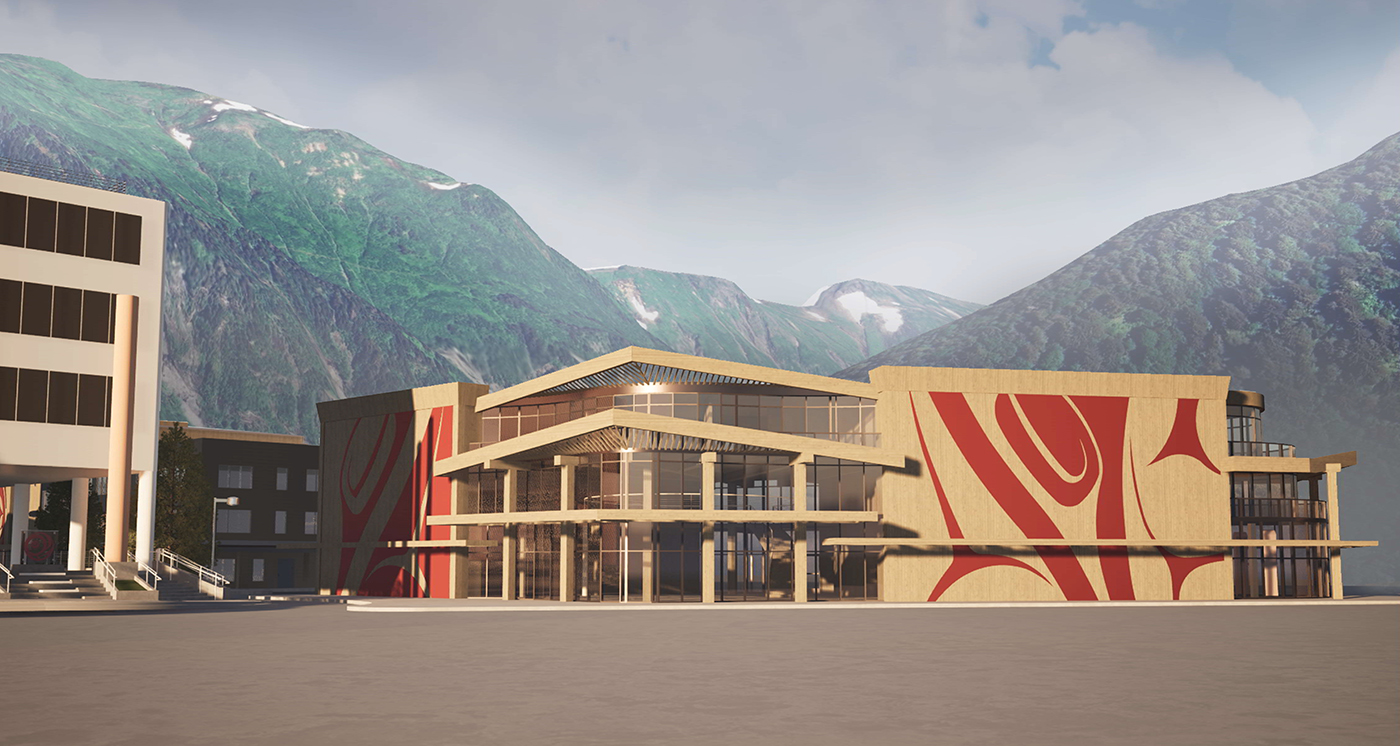
The facility will encompass multi-levels, feature stunning glass walls and be adorned in monumental red formline design — elements that mirror SHI’s Walter Soboleff Building, Atnané Hít (Sealaska Heritage Arts Campus) and its Indigenous Science Building in the city’s designated Heritage Square.
The new structure will span roughly 30,000 square feet and encompass three floors. The space will provide authentic educational, cultural and art experiences for locals and visitors, include a Northwest Coast art glass studio and offer space to house the Juneau-Douglas City Museum, if the assembly elects to move the facility.
Through the glass studio, the famed Tlingit glass artist Preston Singletary will help to establish the program and secure partners who will create an educational structure around glass blowing. This will become a creative space for the community of Juneau — one that could grow to create opportunities for visitors and locals to make their own glass pieces. Singletary will also help create a tiered program to develop skills from beginner to advanced, teaching students to create limited production pieces that could become a cottage industry over time.
The glass studio is based on the wildly successful model created by the Museum of Glass in Tacoma, Washington, which draws nearly 100,000 visitors annually, includes a Hot Shop that hosts more than 50 visiting artists each year and has engaged more than 250,000 students through educational programs to date.
Through community oriented year-round activities, the facility will help draw locals to the downtown corridor in off-tourism months — and help to revitalize downtown, which is a priority of the City and Borough of Juneau. The institute is also considering setting aside some space for apartments in recognition of the community’s housing needs, as well as its own employees.
Economic Benefits
The successful completion of previous SHI capital campaigns has led to significant benefits for Juneau. In addition to its construction projects and their associated employment and economic activity, SHI has provided direct monetary contributions to the Juneau School District and University of Alaska Southeast totaling more than $13,000,000 since 2015, according to a 2025 study by McKenley Research Group, and it plans to continue the educational investments.
Today, SHI employs more than 100 staff in Juneau. An economic impact study by the same firm in 2023 demonstrated that SHI generates more than $30,100,000 in direct and induced economic activity annually in Juneau. That number is expected to go up as the institute hires new personnel to operate the arts building. Because SHI’s buildings are staffed and open year-round, they support area businesses as employees patronize nearby establishments.
As with SHI’s other buildings, the new facility is expected to provide an economic boon during construction, provide new jobs, boost labor income and generate millions of dollars in direct expenditures.
Sealaska Heritage Institute is a non-profit tribal organization founded in 1980 to perpetuate and enhance Tlingit, Haida and Tsimshian cultures of Southeast Alaska. Its goals are to promote cross-cultural understanding by educating the general public about the Indigenous cultures of Alaska. SHI also conducts scientific and public policy research that promotes Alaska Native arts, cultures, history and education statewide. The institute is governed by a Board of Trustees and guided by a Council of Traditional Scholars, a Native Artist Committee, a Southeast Regional Language Committee and an Education Committee.
CONTACT: Kathy Dye, SHI Communications and Publications Deputy Director, 907.321.4636, kathy.dye@sealaska.com.
Captions from top: The facade of the arts building. The structure as seen from Marine Way. Heritage Square, which currently includes SHI’s Atnané Hít (Sealaska Heritage Arts Campus), Walter Soboleff Building, its Indigenous Science Building and the Sealaska building. Schematics by MRV Architects, courtesy of Sealaska Heritage Institute. Note: Media outlets are welcome to use these photos for coverage of this story. For higher resolution images, contact kathy.dye@sealaskaheritage.com.