Ninth annual culturally responsive education conference concludes in Juneau
Event equips educators to create culturally responsive pedagogies
Sealaska Heritage Institute (SHI) concluded its ninth annual Culturally Responsive Education Conference today, wrapping a three-day event that aims to deepen educators’ knowledge of culturally responsive education and allow them to create curriculum that supports all students’ success.
Last’s year’s conference drew about 440 people from Alaska, Canada, the Lower 48 and as far away as Greenland and Nova Scotia. This year, hundreds of people traveled to downtown Juneau from communities throughout Alaska, the Lower 48 and other countries, including New Zealand and Canada.
“When we launched the conference nine years ago, we had no idea how far reaching it would become. We had hoped to model cultural education for Alaskans, but it has impacted people internationally and become a model for inclusive education. It has been a huge success,” said SHI President Rosita Worl.
Each year’s conference provides an environment where participants can learn about and contribute to conversations essential to progressing Native arts, culture and language. The theme of this year’s conference was Learning from Our Ancestors, Shaping Our Future. The theme honors the wisdom passed down through our roots, the teachings of our ancestors and the knowledge embedded in our languages and traditions.
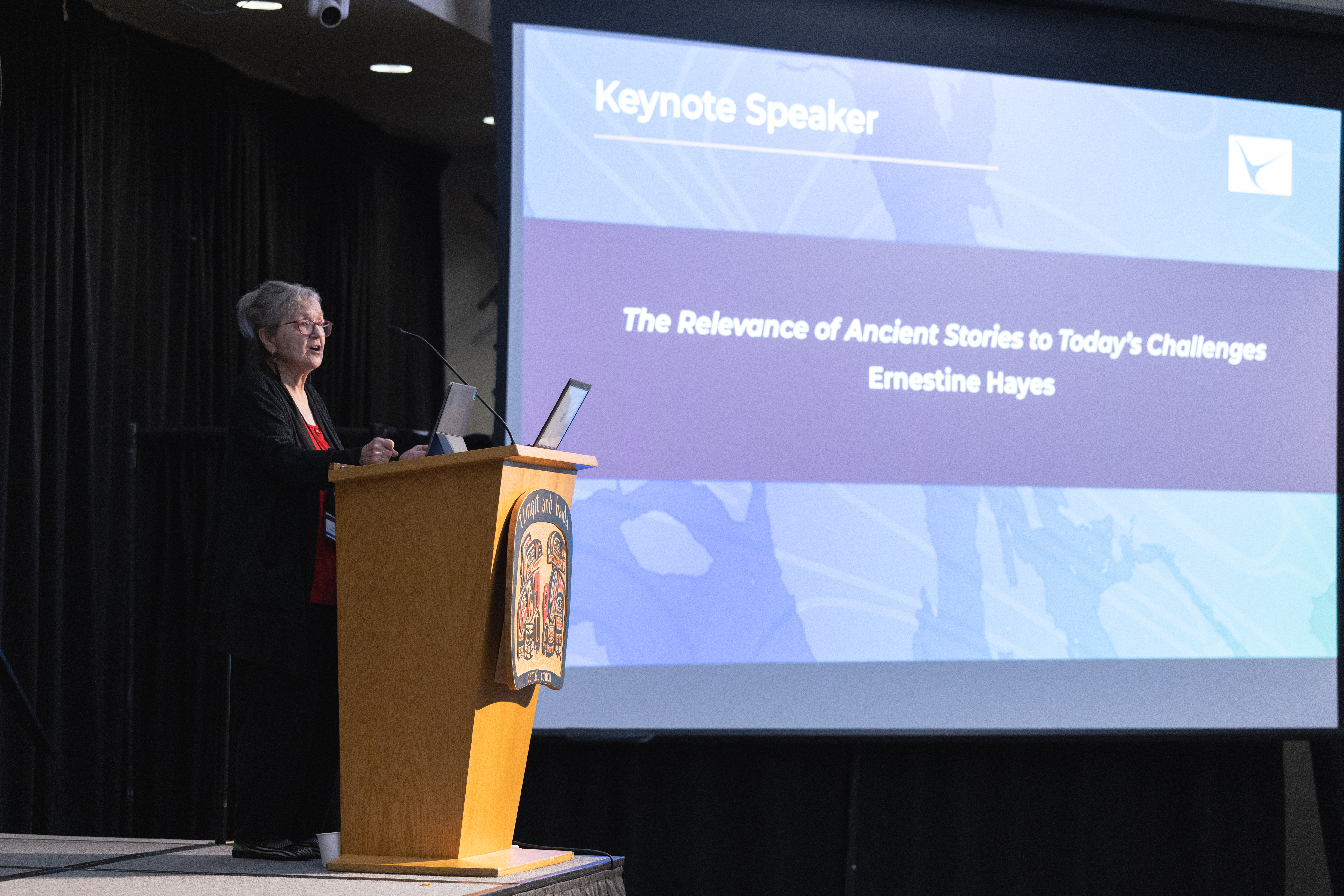
The event included a keynote address by Ernestine Saankaláxt Hayes, over 50 breakout sessions and presentations by featured speakers Dr. Lauren Eckert and Nasya Mo’osk’im gibuu Moore. A full day of field excursions included a weaving workshop, an interpretative tour of Kootéeyaa Deiyí (Totem Pole Trail), a tour of the Alaska State Museum and a canoe trip with a dugout demonstration.
The breakout sessions gave conference participants opportunities to attend presentations by Native leaders across the state. Session leaders explored place-based approaches to STEAM education, taught attendees to create medicines from plants, examined the importance of stories as tools for strengthening Native languages and more.
Sealaska Heritage Institute is a non-profit tribal organization founded in 1980 to perpetuate and enhance Tlingit, Haida and Tsimshian cultures of Southeast Alaska. Its goals are to promote cross-cultural understanding by educating the general public about the Indigenous cultures of Alaska. SHI also conducts scientific and public policy research that promotes Alaska Native arts, cultures, history and education statewide. The institute is governed by a Board of Trustees and guided by a Council of Traditional Scholars, a Native Artist Committee, a Southeast Regional Language Committee and an Education Committee.
Caption: First photo: Author and University of Alaska professor emerita Ernestine Saankaláxt Hayes delivers the conference’s keynote address. Second photo: Conference participants canoe near Auke Bay. Note: News outlets are welcome to use these photos for coverage of this story. For higher-res versions, contact kathy.dye@sealaskaheritage.com